
Authenticating Fine Prints: Provenance and Catalogues Raisonnés
10/16/2025
The Importance of Authenticity
In the world of fine prints, authenticity is the foundation of both artistic and financial trust. A genuine print must establish a verifiable connection to the artist — through creation, documentation, and custodial history — in order to command confidence from galleries, collectors, and institutions.
Provenance
Provenance is the documented chain of ownership and movement of a work over time. It answers the question: from whom, and by what route, did this print come to you? Reliable records — such as gallery or auction invoices, exhibition catalogues, ownership transfers, and certificates — build its pedigree. A clear provenance enhances legitimacy and can influence market value.
Catalogues Raisonnés
A catalogue raisonné is an edited scholarly register that records all known works by an artist (or in a specific medium), annotated with provenance data, exhibition history, bibliographic references, dimensions, signatures, and other identifying traits. Inclusion in a recognized catalogue raisonné is one of the strongest indicators that a print has been accepted within the artist’s canonical oeuvre.
Edition Control and Artist Oversight
Authentic fine prints are typically produced under the artist’s supervision or with the artist’s approval, in a declared edition size. Many impressions bear the artist’s signature and edition number. However, exceptions exist: artist’s proofs, trial proofs, or posthumous editions may follow different conventions. Unauthorized reprints or “later impressions” — even if made from the original matrix — require clear labeling and are usually valued lower.
The Role of Experts and Technical Analysis
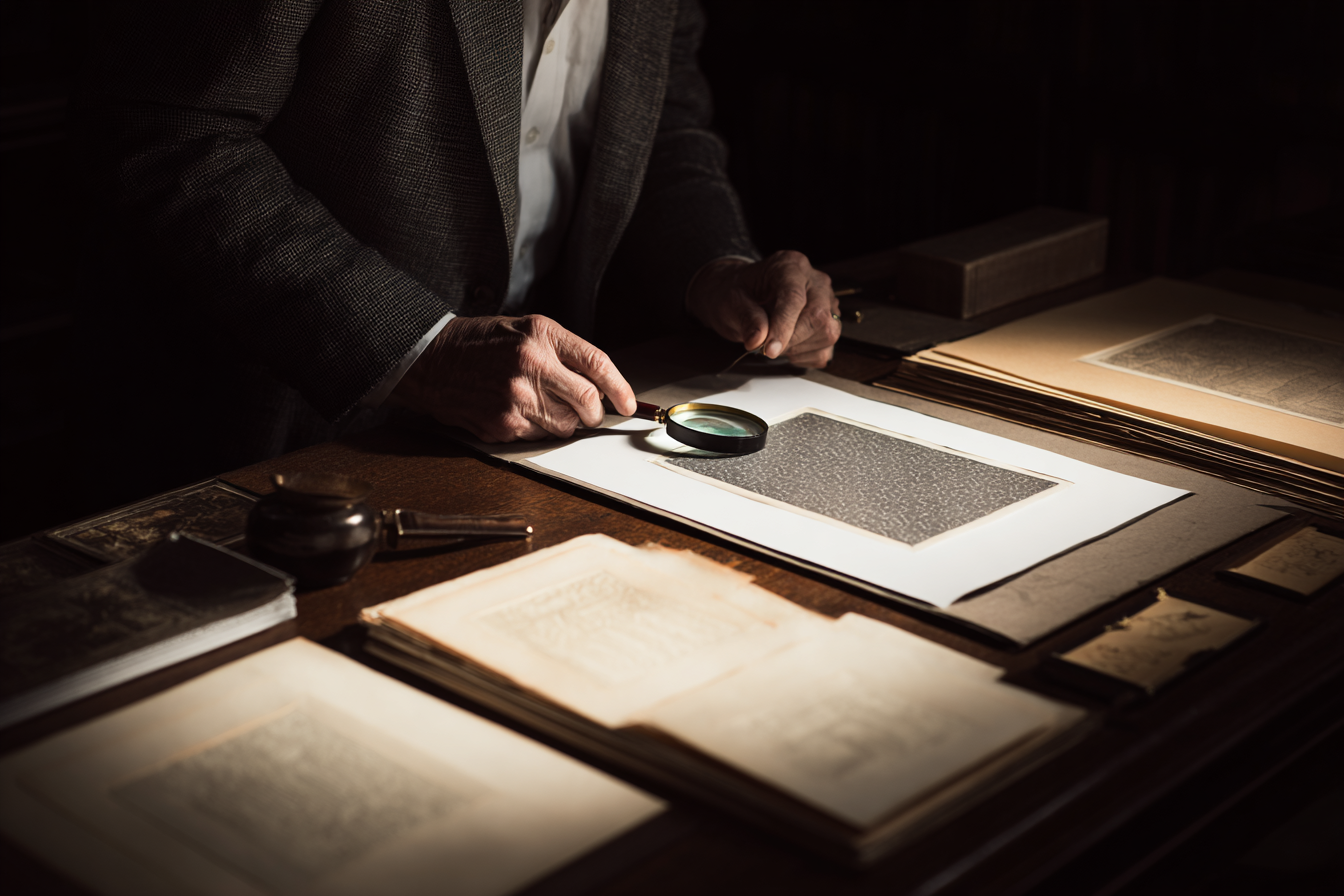
Artist foundations, estates, authentication committees, and recognized scholars often maintain archives and records that guide validation judgments. Independent experts can apply forensic techniques: analyzing paper fibers, ink composition, watermark identification, and printing technique details to confirm or question authenticity.
Why It Matters
Authenticity lies at the heart of a fine print’s cultural significance and market strength. A verified print carries not only the artist’s touch, but the integrity of its identity over time. For collectors, diligence in authentication protects investment and honors the artwork’s lineage.
House of Gulin collaborates with distinguished archives and authentication authorities to procure prints with transparent provenance and documented legitimacy — ensuring each acquisition reflects both connoisseurship and market confidence.